

Capital One
Overview
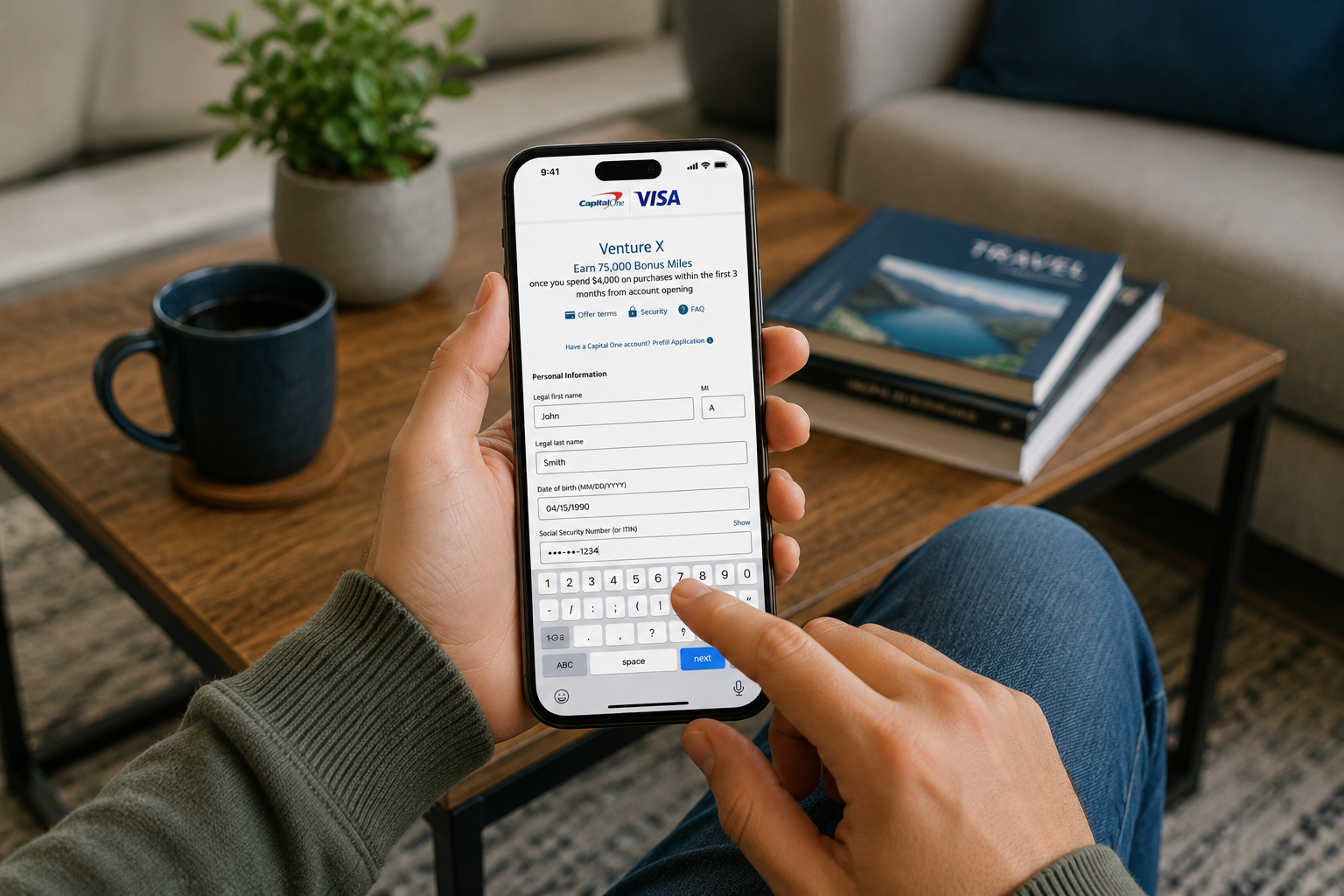
Capital One is the first credit card for 6 million new revolving lines of credit in the United States every year. Across the life of those accounts, a clear retention problem emerged: customers open the card, manage their credit well through the first year, and then leave for a competitor. My charge was to understand why they leave as early as the data would allow, get to the emotion underneath it, and design a solution that keeps first-time customers.
Research
I worked with our data science team to find the moment the relationship changes. Of the 6 million new accounts each year, almost 30% leave in the 12th month. A trigger moment recurs around month 11 across the majority of these break-ups.
So we asked the obvious question: why?
To find out, I designed an experiment called the Break-Up Letter, an exercise built to draw out honest, emotional feedback about why credit relationships end from the customer's point of view.
Hypothesis
The data pointed to a charge-off (an account the customer closes, or one the bank writes off as a loss) clustering just before the one-year anniversary. That timing suggested the dissatisfaction wasn't about a single event. It was about a poor fit with the card itself: too much credit or too little, or benefits that looked good on paper but didn't hold up in practice.
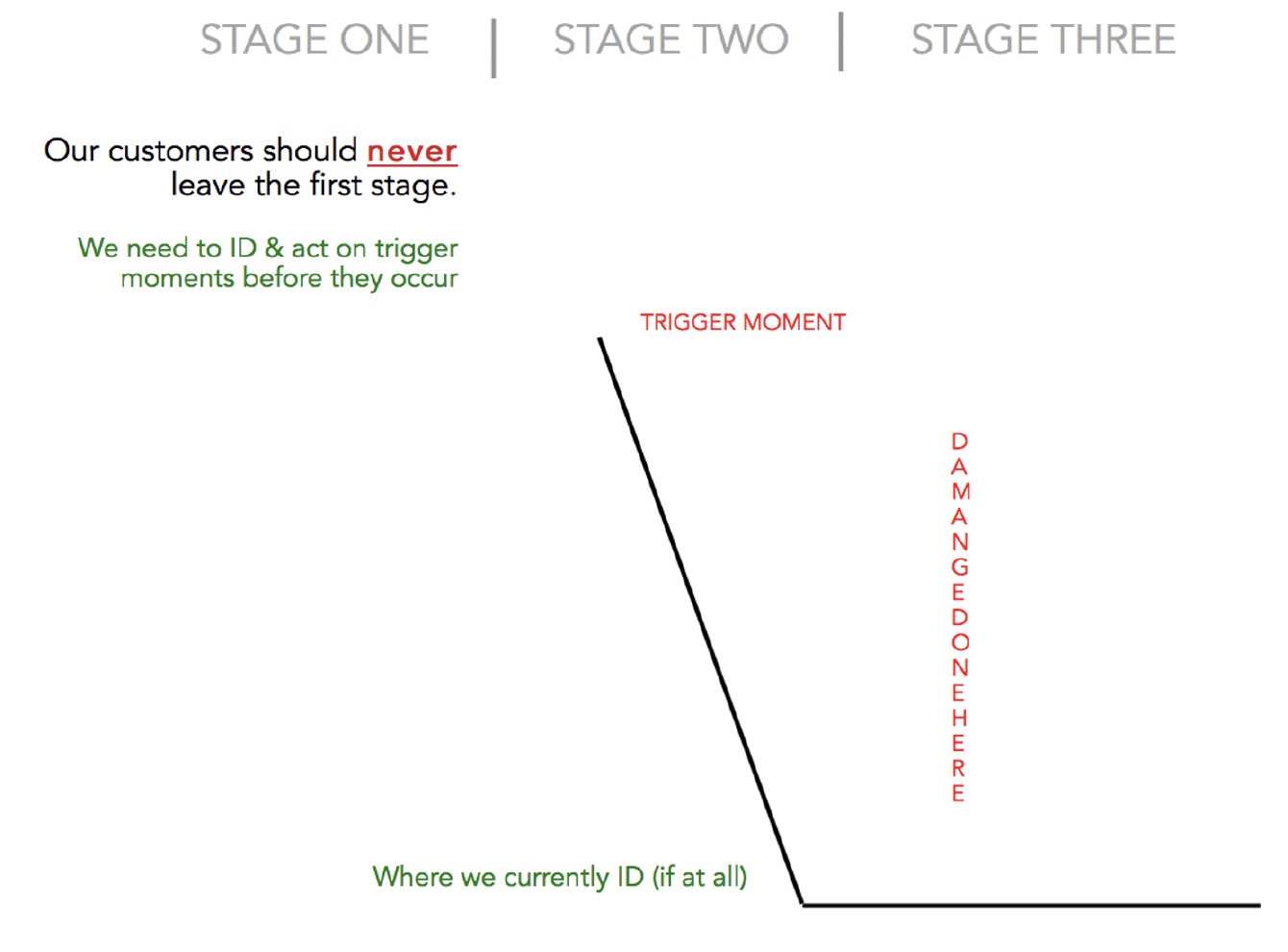
From that, I built a break-up framework describing the three stages every account that ends in a break-up moves through:
- Dissatisfaction
- Trigger moment
- Charge-off or account closure
Empathy Interviews
We went to 3 different regions (Pittsburgh, Los Angeles and New York City) and interviewed people from all over the socio-economic spectrum to test our hypothesis. The topic of most of our interviews was digging into why they left Capital One as customers.
Insights:
- Break-ups suck, even financial ones
- People enter financial relationships with the best of intentions
- People are willing to give more information to avoid a break-up

Insights:
- Break-ups are painful, even financial ones.
- People enter financial relationships with the best of intentions.
- People will share more information to avoid a break-up.
Synthesis
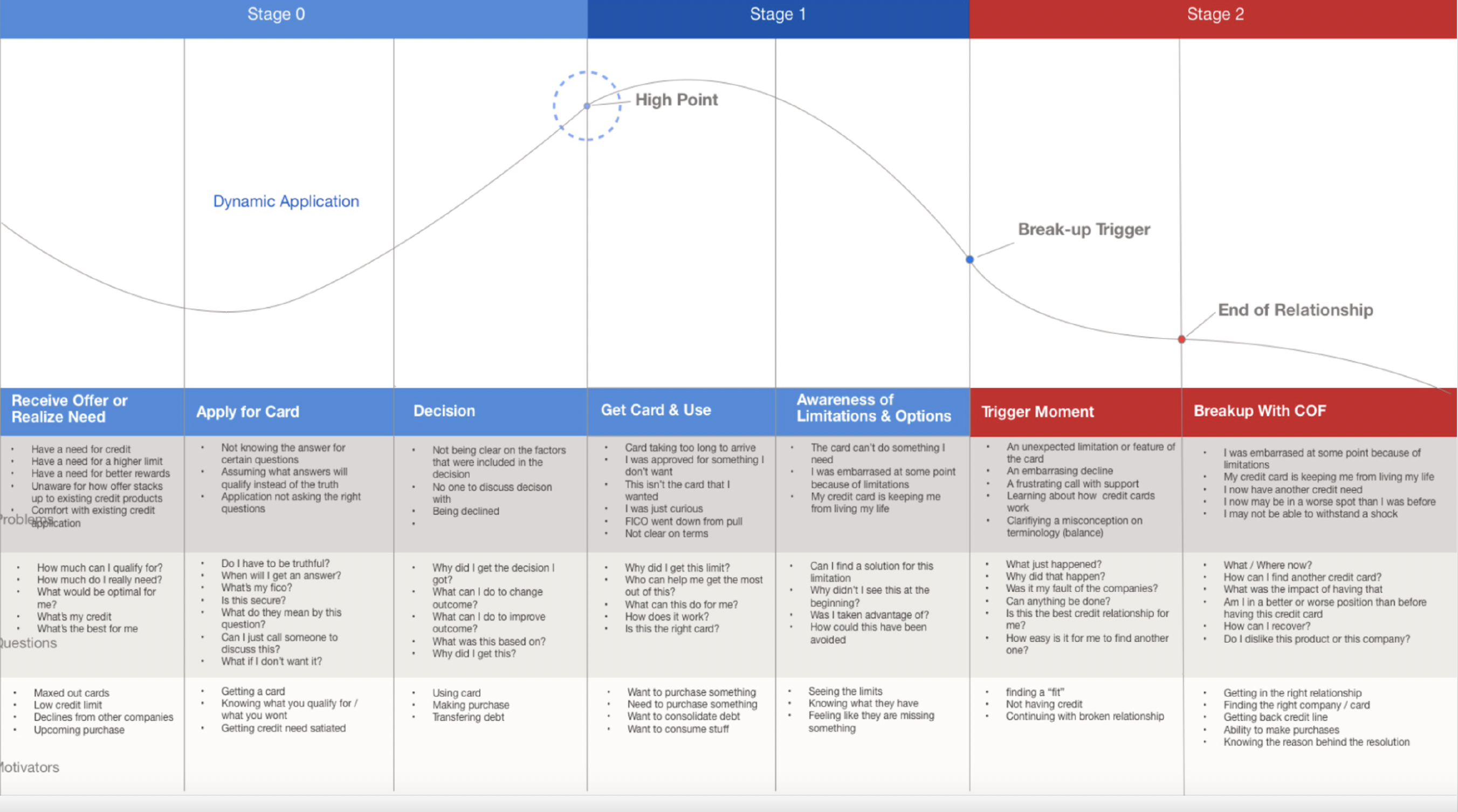
The interviews validated the framework, and the qualitative data let us build an experience map that drove the rest of the design.
The real finding reframed the whole project. Customers weren't leaving after a year because of an acute event. They were in the wrong card with the wrong limit from the start, and it simply took a year to realize it. So I proposed a Dynamic Application: an application that lets people specify the card, benefits, limits, and features they actually need, then uses asynchronous underwriting (running an instant credit decision in the background while they keep filling out the form) to return a recommendation and a decision at the moment they apply.
Design
The point of intervention belonged at the start of the customer experience, not the end. Our existing application did a lot of risk mitigation, but it was static: it never accounted for who was actually applying. That made the application stage our highest-leverage opportunity.
How might we prevent the break-up moment from ever happening by starting the credit relationship with as much information as the applicant is willing to give?
Concepting
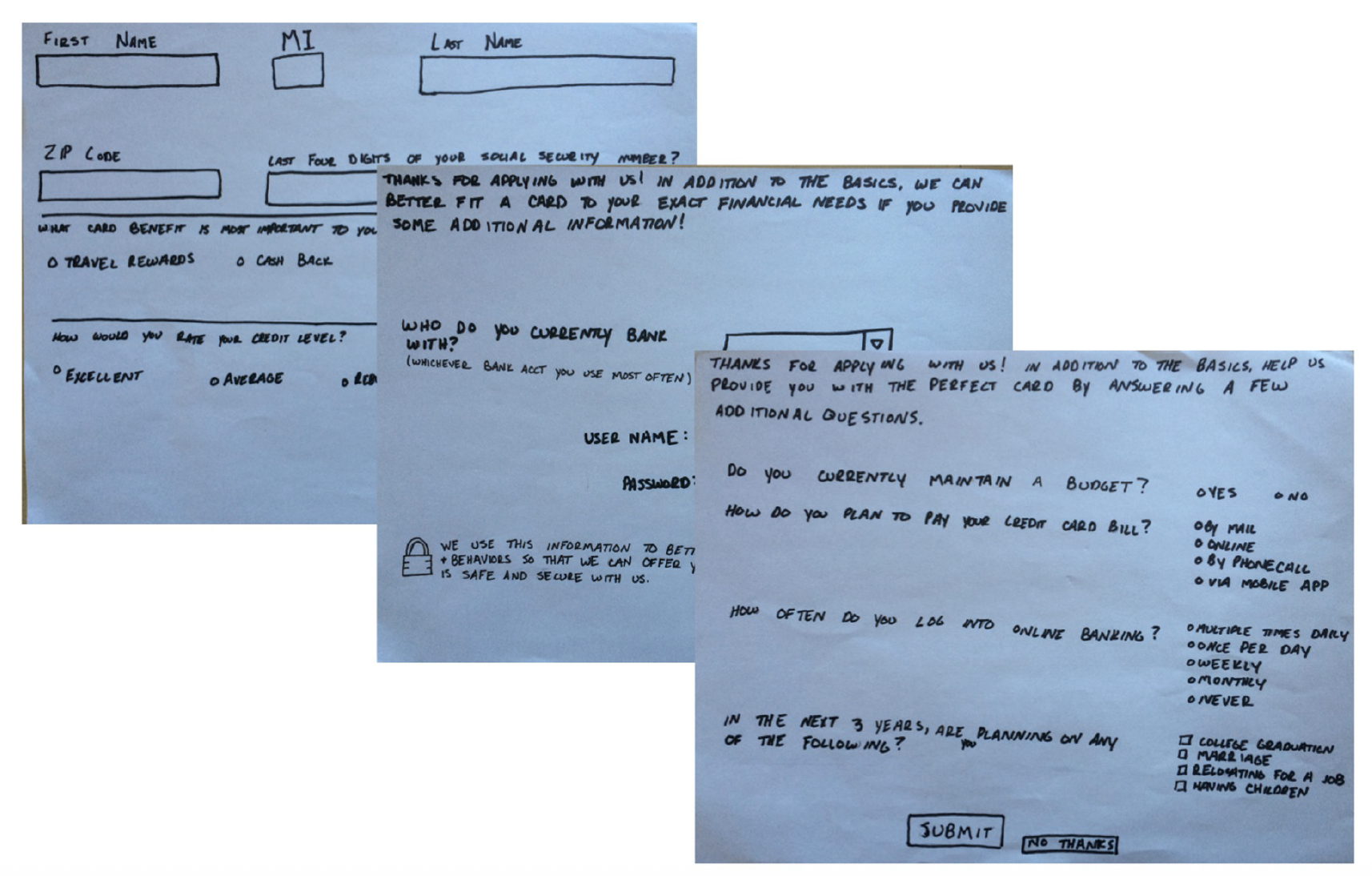
We shared low-fidelity mockups with customers in-branch and iterated quickly. Those sessions taught us:
- The order of questions matters.
- Justifying why we need information encourages honesty.
- People will share more when they understand why it's being asked.
With those insights I built higher-fidelity concepts and ran a second round of testing, this time focused on which interactions actually lift completion.
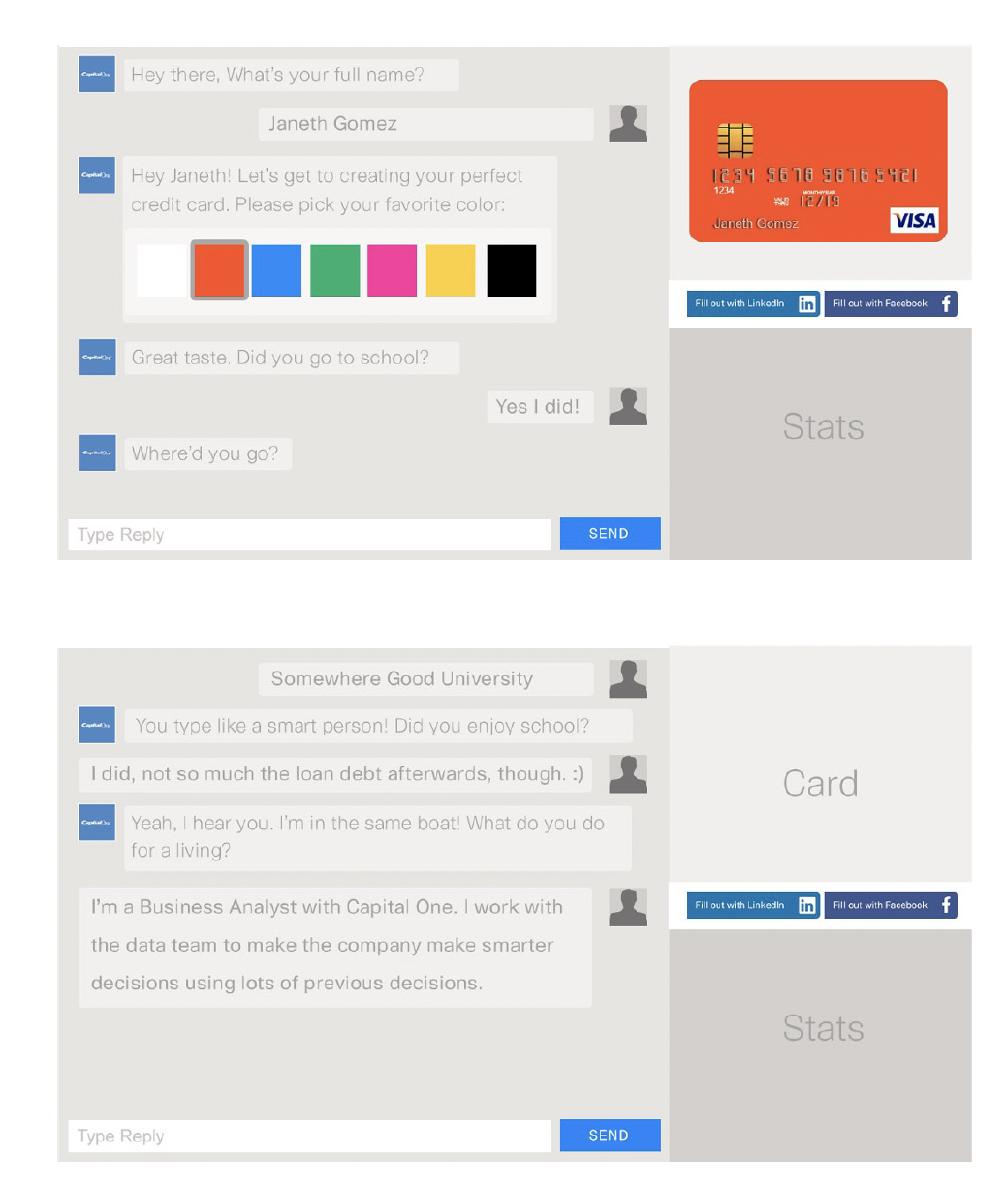
Conversational Interface
Stimuli
We tested whether a conversational interface would encourage applicants to volunteer more than the minimum required information.
Insight
An open-ended application is acceptable, but the perception that a person is reading the responses on the other end is anxiety-inducing.
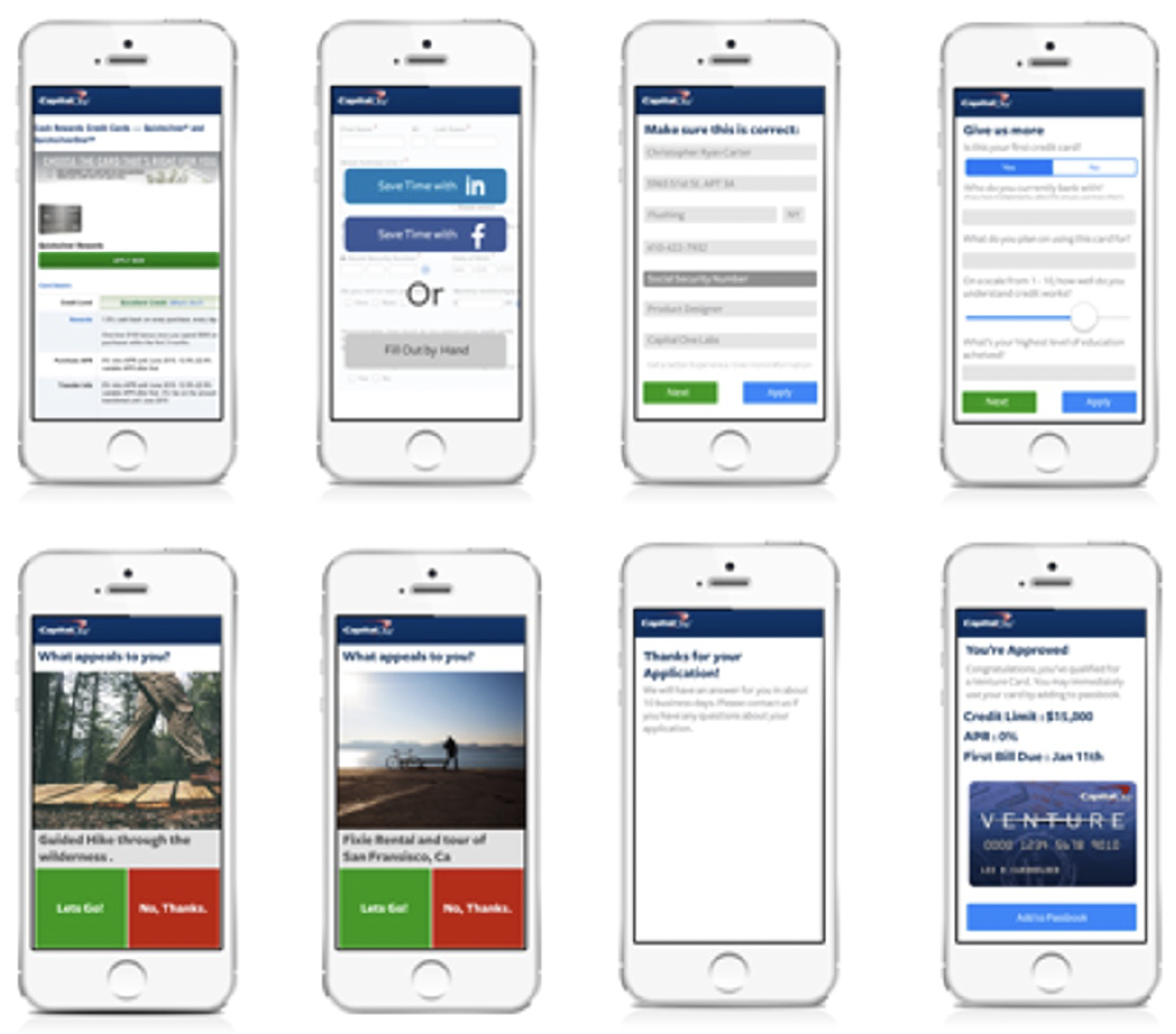
Mobile First
Stimuli
Mobile is clearly the preference for servicing credit. Would that hold true for the application itself?
Insight
People value the convenience of starting on mobile, but the length of a credit card application creates task fatigue, and completion rates fall sharply.

Results
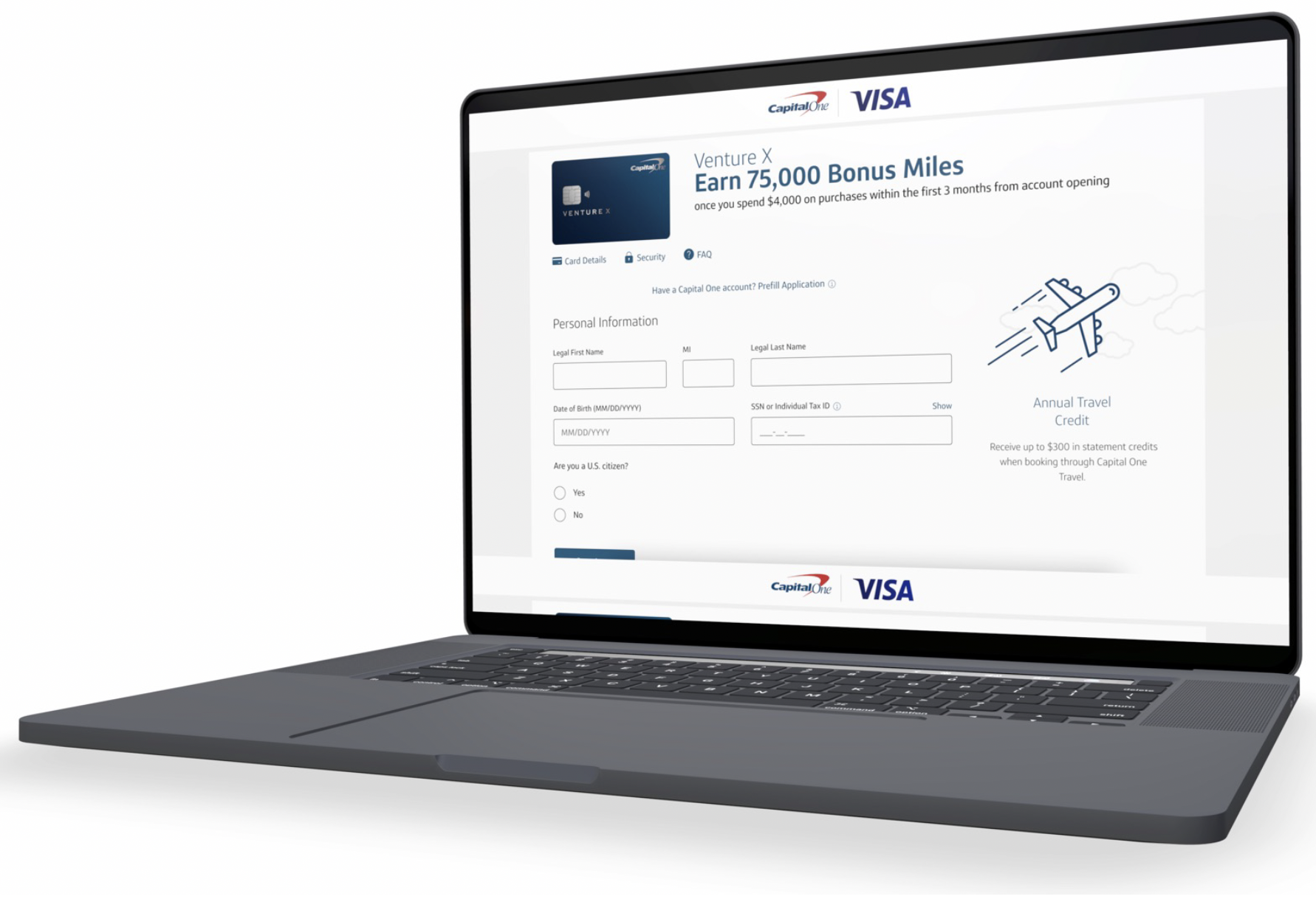
We piloted the Dynamic Application to 3% of applicants over three months. Once completion clearly outpaced the previous design, we rolled it out across every product. One-year relationships for first-time cardholders dropped, which is to say the break-ups did too.