

ConEdison of New York
Overview
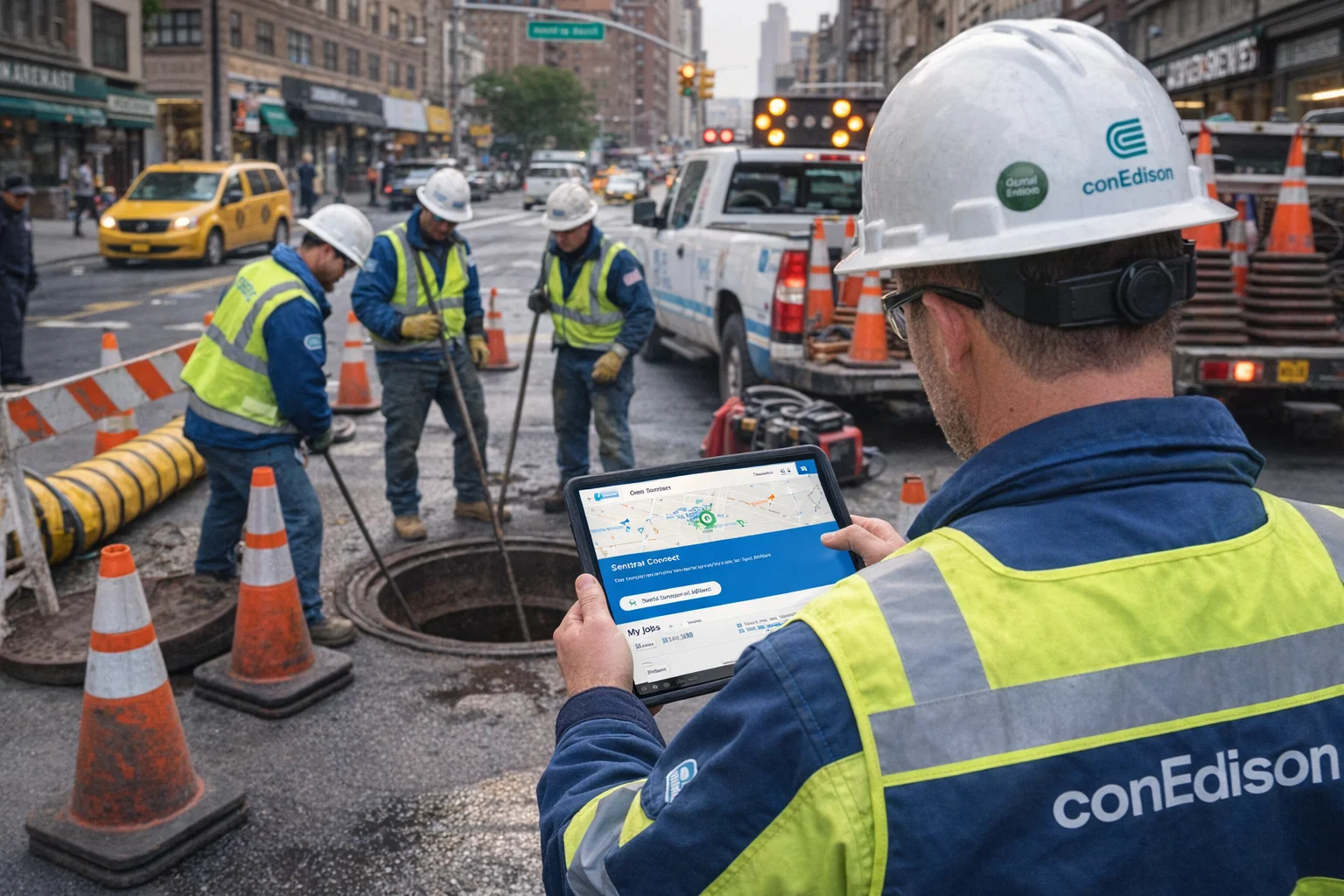
ConEdison delivers gas, electric, and steam to all five boroughs of New York. Its grid is maintained by more than 10,000 field employees: supervisors, work planners, and mechanics, who complete hundreds of jobs a day. After 200 years of operation, most of that work still ran on paper and a sprawl of disconnected tools: one application to view a job, another to assign it, another to document it. The result was a fragmented, high-friction experience layered on top of work that was already complex and often dangerous.
My team and I were charged with reimagining that experience from the ground up. Working across both technology and field operations, we designed a single platform that removed friction from daily work and, just as critically, gave the business one system to maintain instead of thirty.
Approach
Success depended on one thing: understanding how the work actually happened. With 10,000 employees across five boroughs, each running its own operating model, we couldn't design from assumptions. We conducted more than 200 empathy interviews, indexing how each role approached its work and which tools it relied on.
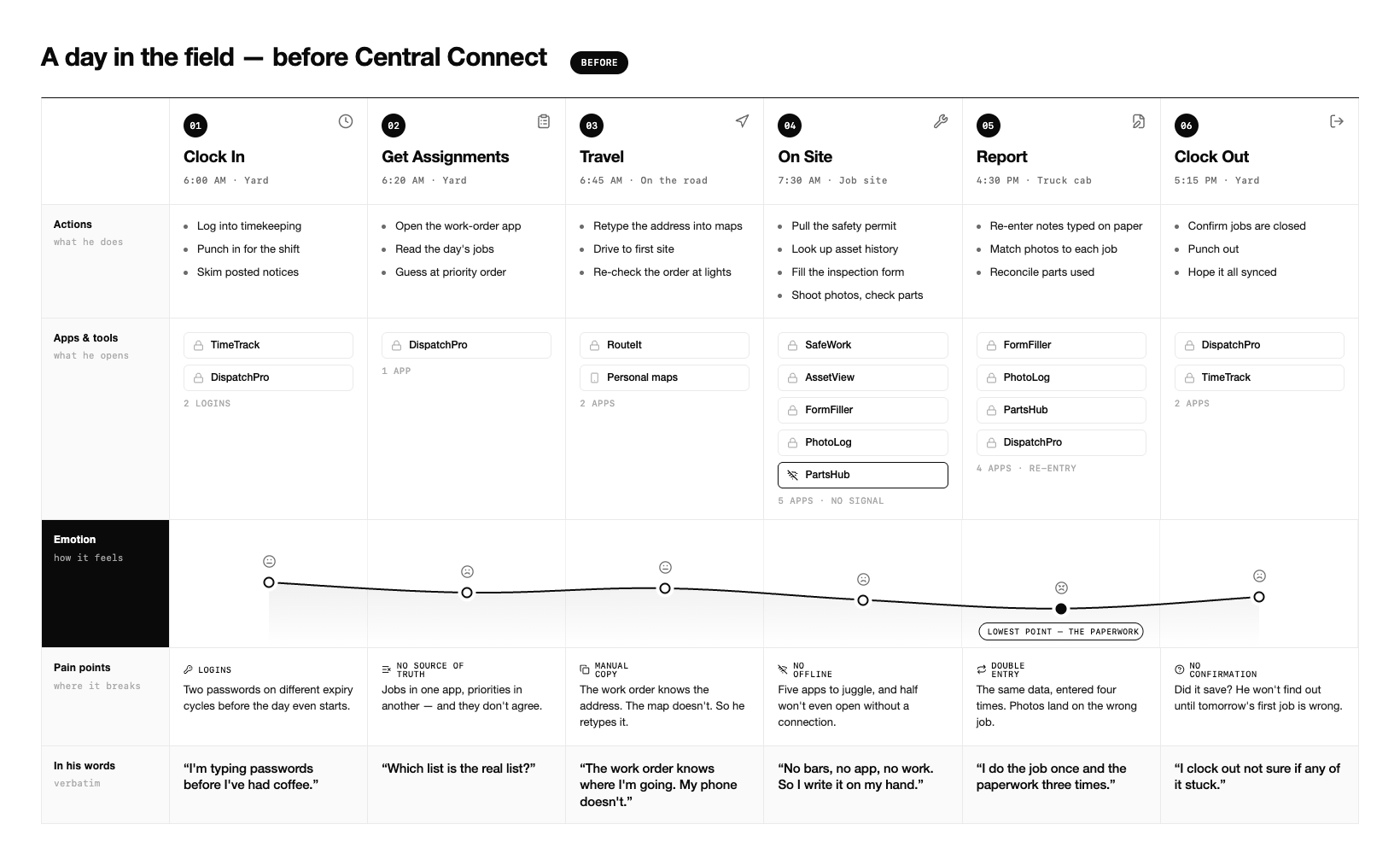
The reality is, they (ConEdison) offer a lot of different tools but most of them don't work, and the ones that do require us to know how to access them. I have to log into 5-6 different systems every morning. So we just kind of use what we can to get the jobs done as quickly and safely as possible. Who has time to search for a link on 5th Ave with cars whizzing by?
- Field Mechanic (Manhattan)
We have a lot of data and information, I mean we are a 200 year old company, but none of it is available to my crew who need it. Accessing these systems takes so much effort and time that we don't even bother for the most part, but it is really important.
- Electric Operations Supervisor
Cross-functional Workshops
I led a series of in-person workshops with each line of business. The goal wasn't just to agree on what to build. It was to build consensus on which problem was worth solving and why it existed in the first place. Aligning technology and field operations around a single shared problem statement became the foundation everything else rested on.
This journey map outlines the realities of utilizing the technology tools and the frustrations that grow with it.
Insight:
The fragmented experience wasn't a tooling problem. It was a structural one. Siloed operating models across service regions had produced siloed tools. To stay both productive and compliant, employees had quietly engineered their own workarounds, and those workarounds almost never used the official tools as intended.
Uncovered Opportunities
A handful of opportunities surfaced with striking consistency across every interview:
- Unify existing applications into one cohesive platform with shared data flow.
- Connect to other systems via API for clean interoperability and data exchange.
- Digitize paper-driven processes to cut errors and manual handling.
- Streamline manual effort through automation, freeing crews for higher-value work.
- Standardize across regions for consistent process and service quality.
- Capture historical paperwork as searchable, archived records.
- Enable photo and video capture for asset visibility and maintenance.
Design
Workflow and Data Mapping
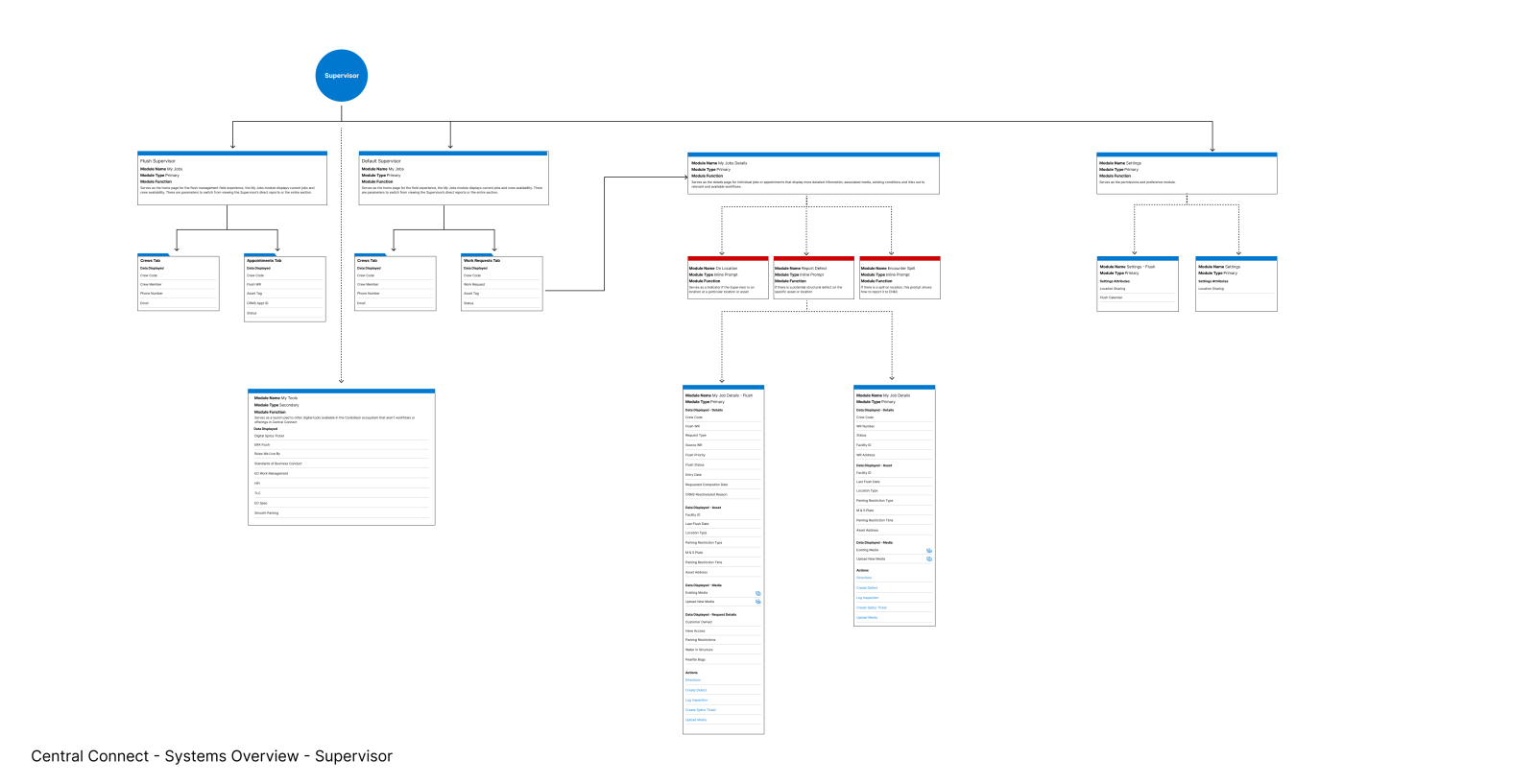
With the problem defined, we mapped every touchpoint in each persona's day. The resulting workflow-and-data map exposed exactly where work fragmented, and where a single platform could carry it end to end.
Platform Design
We were solving two problems at once: the employee experience, and the mounting cost and complexity of maintaining 30+ applications, few of which shared a technology stack.
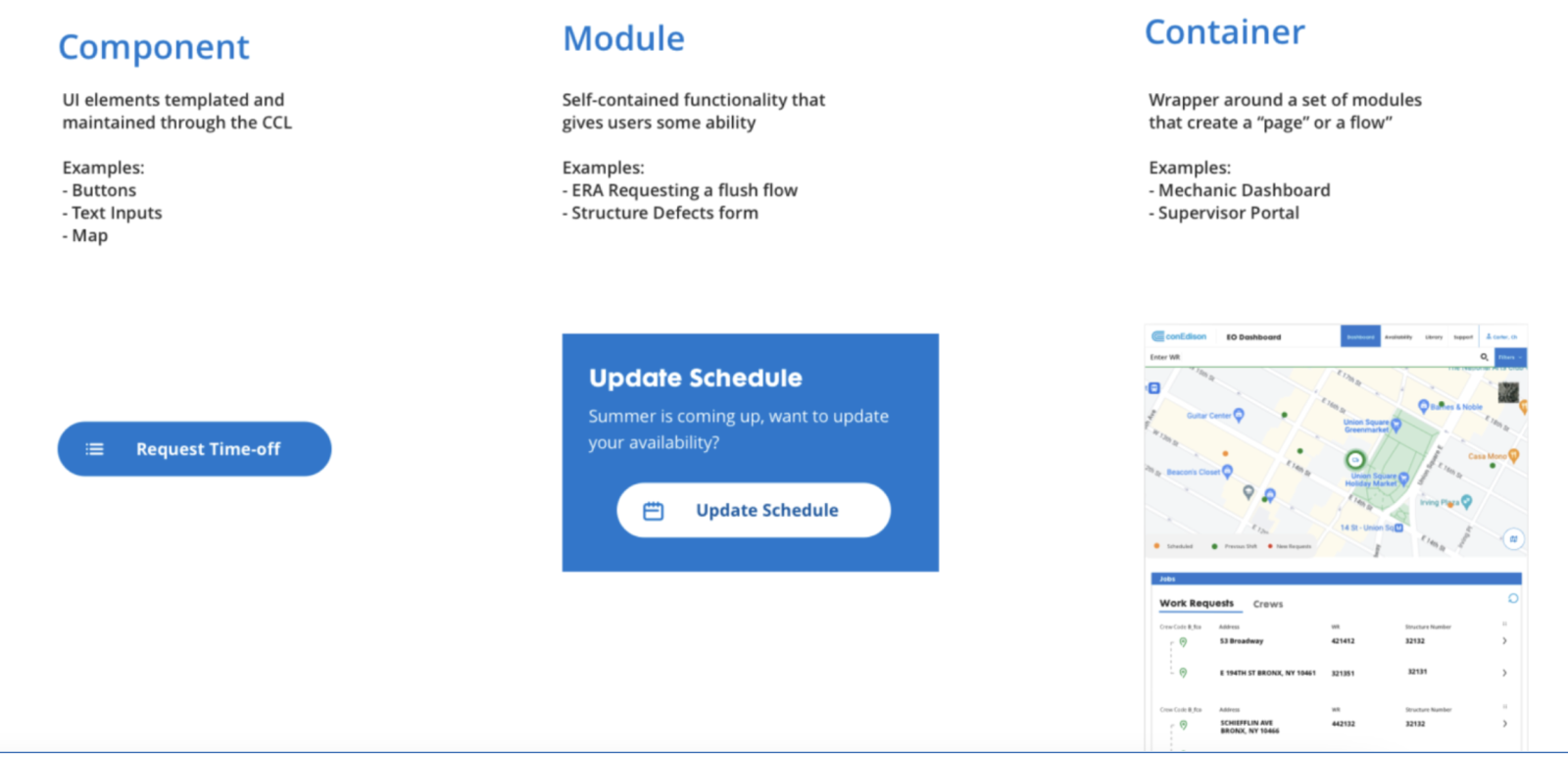
My answer was modularity. Rather than build another monolithic app, or yet another point solution, I proposed an architecture in which a single codebase and a single technology stack serve many users and workflows through composable modules. One platform, configured per role and region, instead of thirty applications maintained in parallel.
That decision reframed the project from a redesign into a system. It also gave the business a durable answer to integration: a consistent layer that connects to existing systems through APIs and absorbs legacy applications over time, rather than forcing a rip-and-replace.
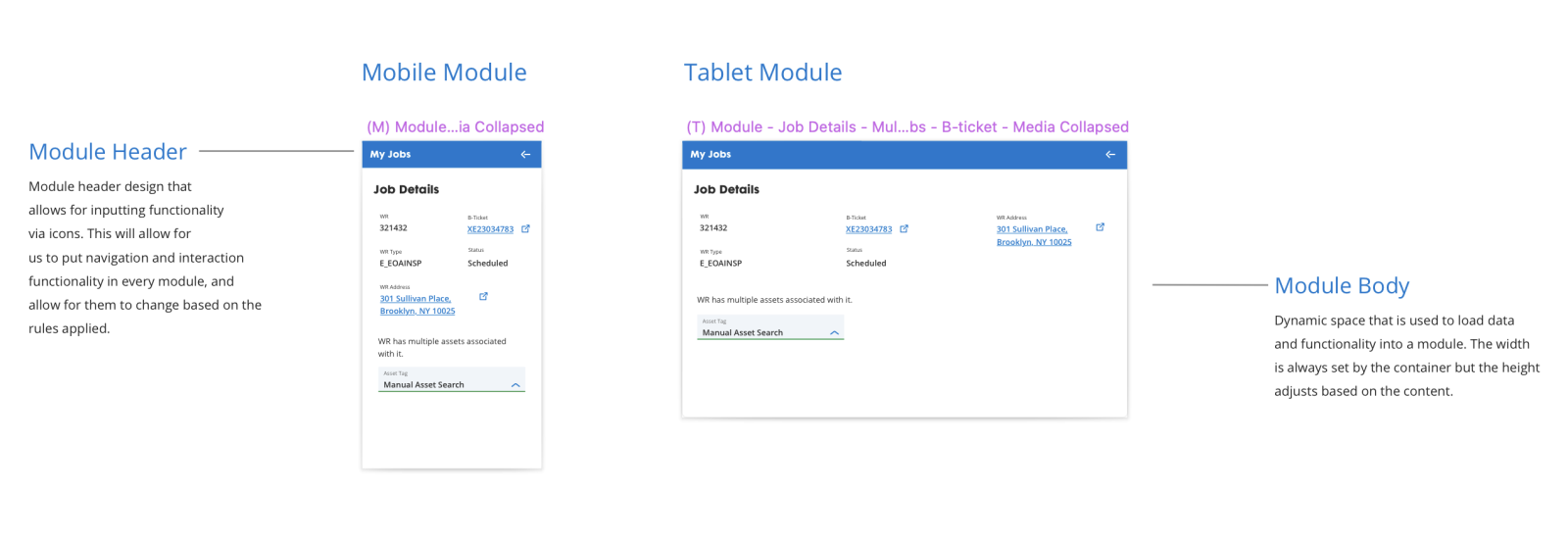
User Interface Design
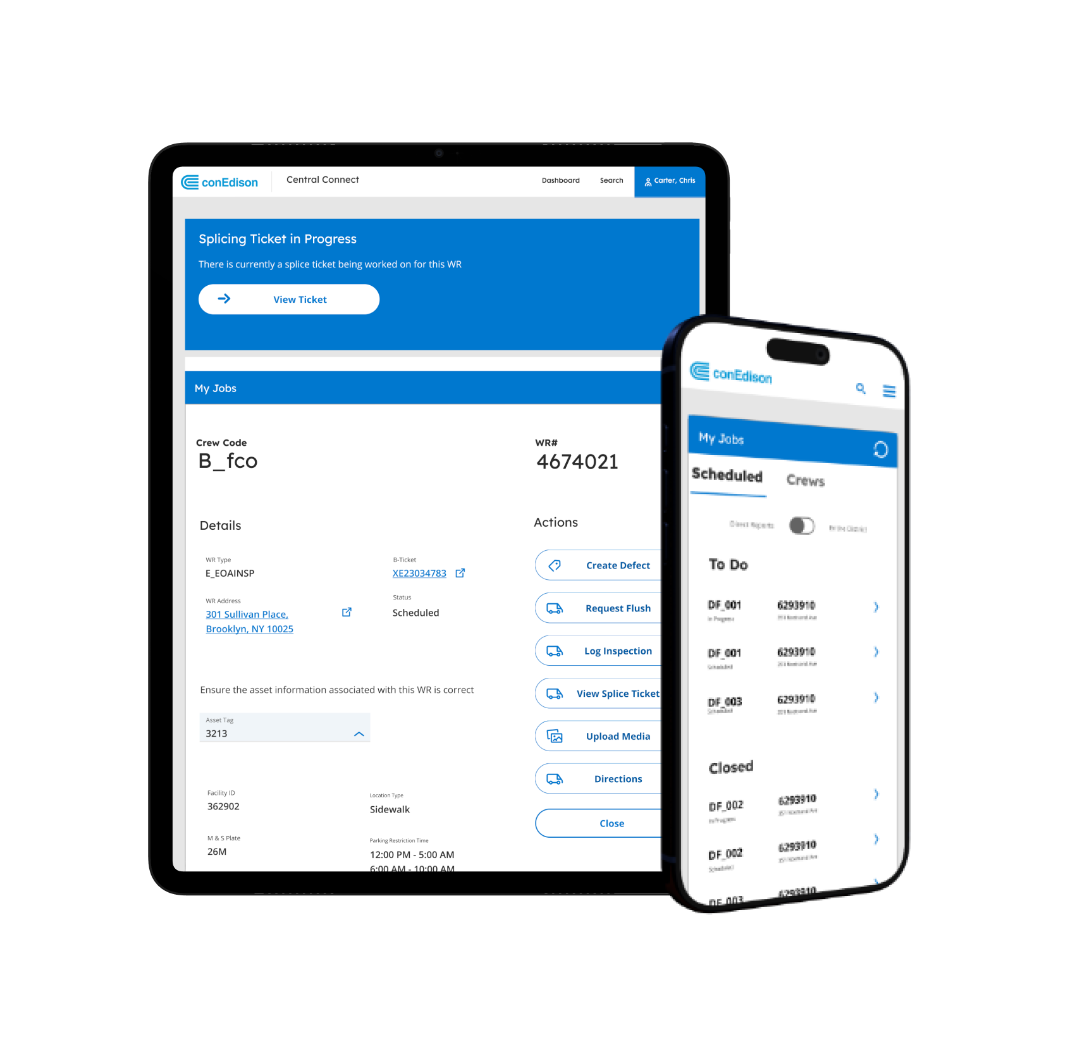
With workflows mapped and the architecture set, we designed end-to-end experiences for each primary persona. Because so much of the work happens underground and on the street, every interface was built for low connectivity and fast, unambiguous use in the field.
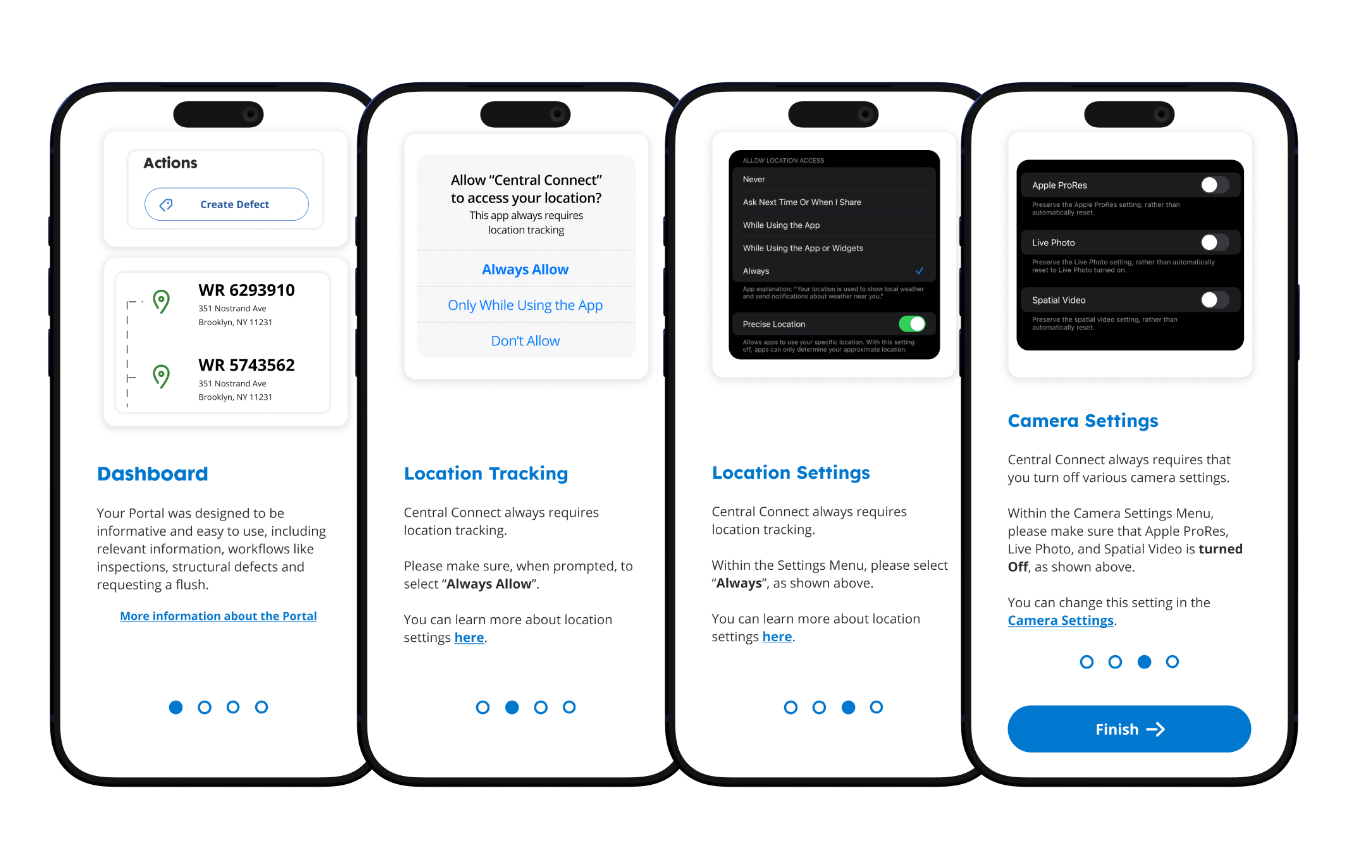
Mobile Onboarding
We made the decision to add some friction on the front-end of the experience so the rest of it makes sense.
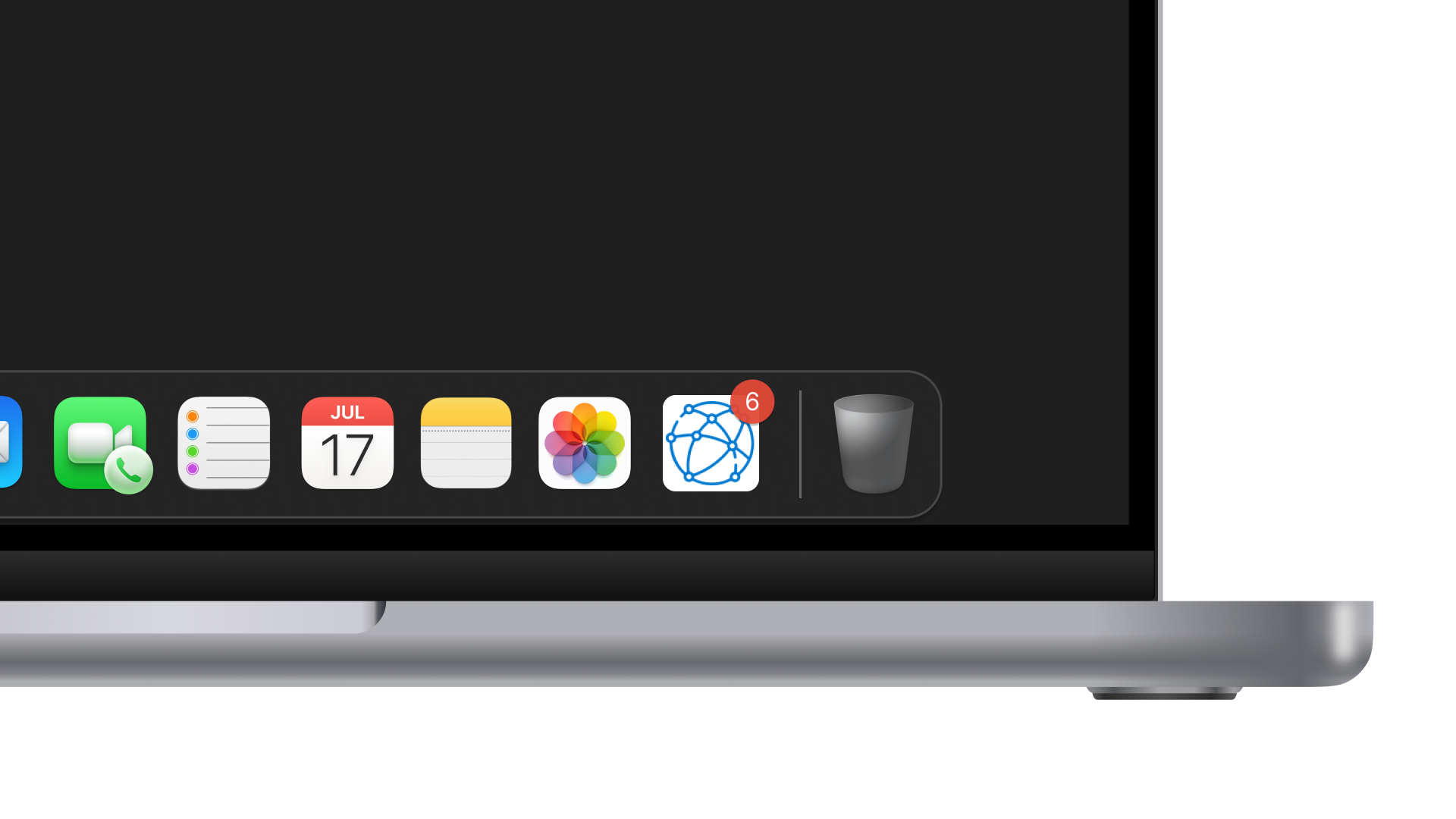
Desktop App
Being a part of the users daily workflow, we created a desktop application with offline capabilities.
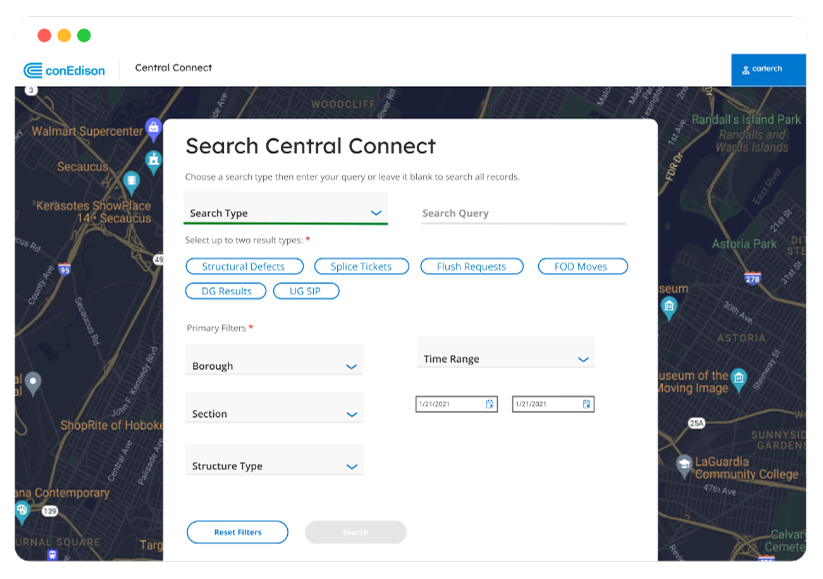
Search Portal
All data collected in the field is accessible to the rest of the company for analytics purposes. This unlocked a lot of value for the company to be able to easily search completed work.

Results
Central Connect replaced a tangle of logins and links with a single platform. For employees, that meant less friction at the start and end of every job. For the business, it meant retiring the maintenance burden of more than 30 separate applications.
The platform has been adopted across ConEdison's entire electric division, now serving roughly 5,400 sessions every week.
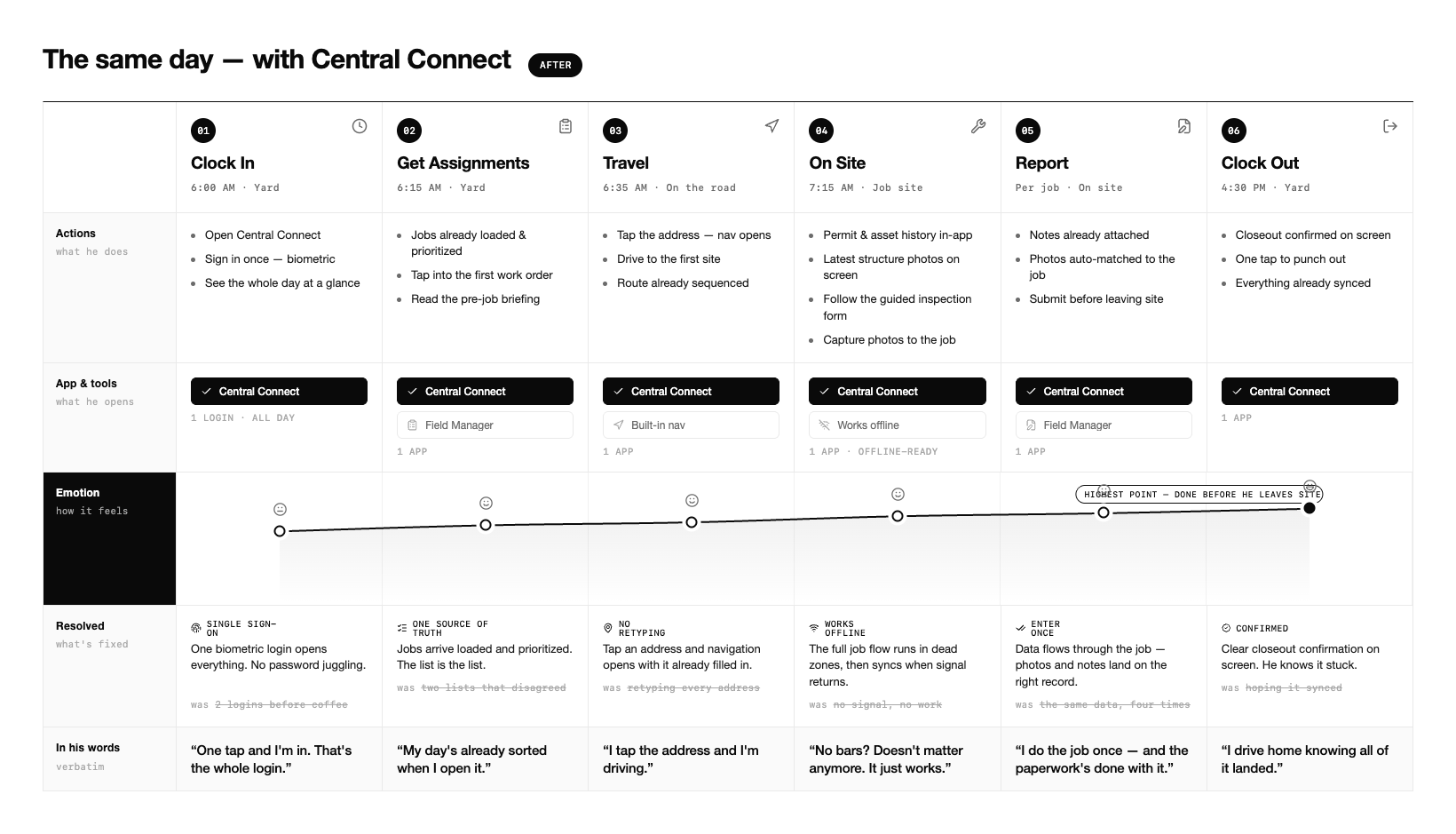
Central Connect has been adopted by the entire electric division of ConEdison.